

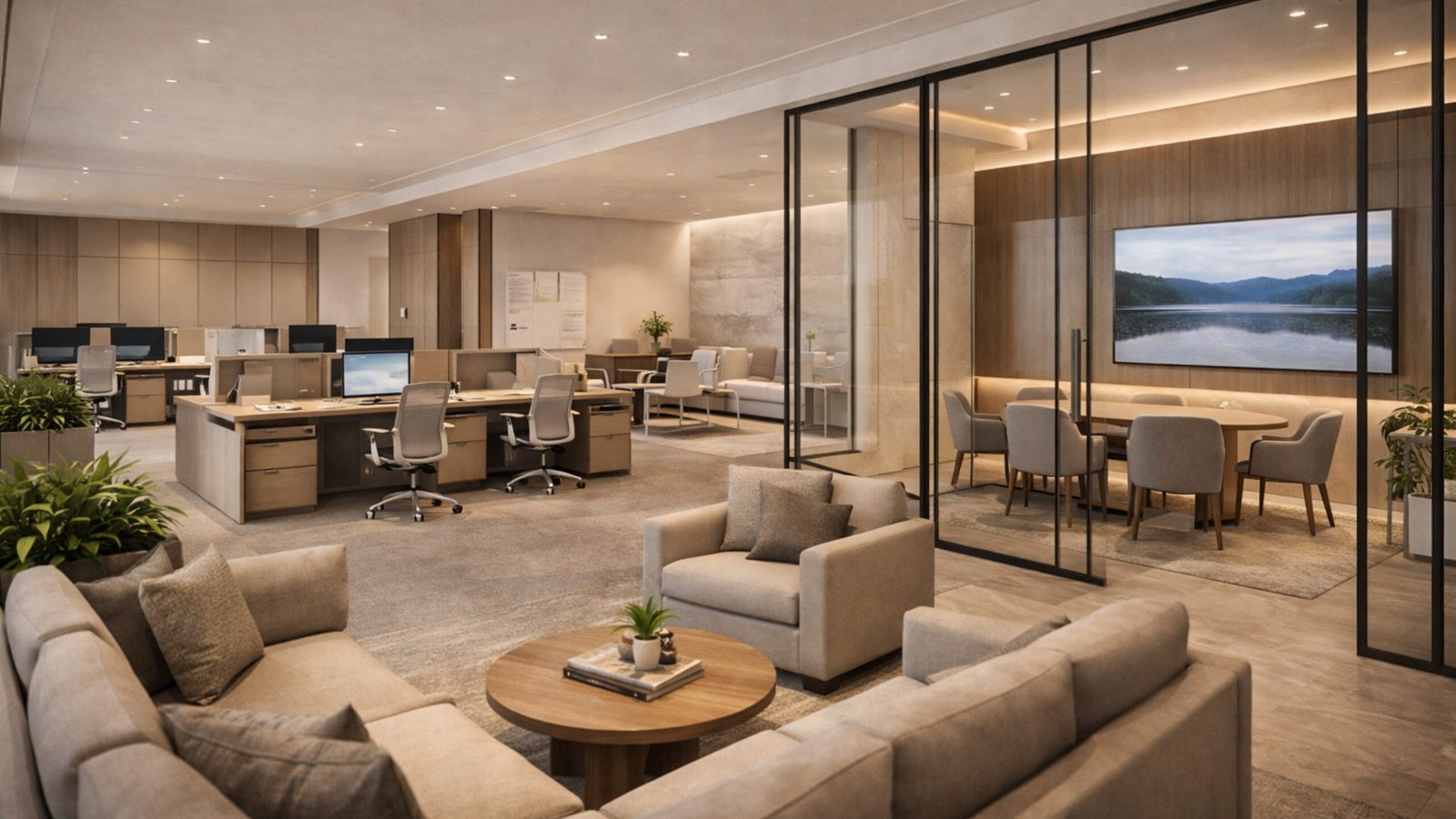
What Trends Are Top Office Interior Designers in Dubai Using Today?
Office design in Dubai has changed dramatically over the last few years. What once focused mainly on appearance and hierarchy has shifted toward comfort, flexibility, and employee well-being—without losing the premium feel the city is known for.
Today, top office interior designers in Dubai aren’t asking, “How impressive does this office look?”
They’re asking, “How well does this office support the people who use it every day?”
That shift has reshaped the way workspaces are designed across corporate offices, startups, and professional firms throughout the city.
Let’s take a closer look at the office interior design trends Dubai’s leading designers are actually using today—and why they matter.
Office Design in Dubai: A Shift from Status to Support
Traditional office layouts were often built around:
- Private cabins
- Formal meeting rooms
- Rigid hierarchies
- Visual statements of authority
While some of that still exists, modern Dubai offices are becoming more human-centric. Companies now recognize that productivity, retention, and creativity depend heavily on how employees feel in their workspace.
This has led to design choices that prioritize:
- Comfort
- Focus
- Flexibility
- Collaboration
- Well-being
Luxury is still present—but it’s quieter, calmer, and more intentional.
1. Flexible Layouts Over Fixed Workstations
One of the strongest trends in Dubai office interiors today is flexibility.
Instead of rigid desk arrangements, designers are creating:
- Modular workstations
- Hot-desking zones
- Flexible team areas
- Multi-use meeting spaces
This approach allows offices to adapt as teams grow, roles change, or work styles evolve—without constant renovation.
For fast-growing Dubai businesses, flexibility isn’t optional anymore—it’s practical.
2. Activity-Based Working Zones
Top office interior designers in Dubai are designing offices based on how work actually happens.
This means creating distinct zones for:
- Focused individual work
- Collaborative teamwork
- Meetings and presentations
- Informal discussions
- Short breaks and mental reset
Instead of expecting employees to work the same way all day, offices now support different tasks with different environments.
This zoning significantly improves efficiency and reduces frustration.
3. Warm, Neutral Color Palettes
Cold, corporate blues and stark whites are giving way to warmer, more balanced tones.
Popular office color palettes in Dubai today include:
- Soft greige
- Warm beige
- Muted earth tones
- Subtle wood finishes
These colors reduce visual stress and create a calm atmosphere—especially important in high-pressure work environments.
Designers often add contrast through texture rather than bold color.
4. Biophilic Design: Nature Inside the Office
Nature-inspired design is no longer just a trend—it’s becoming a standard.
Biophilic elements commonly used include:
- Indoor plants
- Natural wood finishes
- Stone textures
- Soft daylight integration
In Dubai’s urban environment, these natural touches help balance the intensity of city life and improve overall well-being.
Employees feel more relaxed, and spaces feel more inviting.
5. Lighting That Supports Focus and Comfort
Lighting design has become far more thoughtful.
Instead of relying on harsh overhead lighting, designers now use:
- Layered lighting systems
- Indirect lighting for comfort
- Task lighting for focused work
- Accent lighting to highlight architecture
With Dubai’s strong natural light, managing glare and heat is just as important as brightness.
Good lighting reduces eye strain, improves mood, and supports productivity throughout the day.
6. Acoustic Comfort Is a Priority
Noise has become one of the biggest concerns in modern offices.
Open layouts look great—but without acoustic planning, they can quickly become distracting.
Top office interior designers address this by:
- Using acoustic panels
- Incorporating soft finishes
- Creating quiet zones
- Designing sound-buffered meeting rooms
This balance allows collaboration without sacrificing concentration.
7. Offices That Feel Less Corporate, More Human
Another noticeable trend is the move away from rigid corporate aesthetics.
Modern Dubai offices are beginning to feel:
- More relaxed
- More welcoming
- Less formal
- More personal
This doesn’t mean unprofessional—it means comfortable and approachable.
Designers achieve this through:
- Lounge-style seating
- Warm materials
- Thoughtful layouts
- Casual meeting areas
Employees feel more at ease, which often leads to better engagement.
8. Integrated Technology That Stays Invisible
Technology is essential—but designers are making sure it doesn’t dominate the space.
Current trends focus on:
- Concealed cabling
- Smart lighting systems
- Seamless AV integration
- Clean workstation setups
The goal is to support modern work without cluttering the environment.
9. Sustainable and Durable Design Choices
Sustainability is becoming an important consideration—even in luxury office interiors.
Instead of trendy but short-lived materials, designers are choosing:
- Durable finishes
- Energy-efficient lighting
- Long-lasting furniture
- Smart space planning that reduces waste
These choices benefit both the environment and long-term maintenance costs.
10. Storage and Organization Built into Design
Clutter quietly affects productivity.
Modern office interiors in Dubai incorporate:
- Built-in storage
- Clean desk concepts
- Organized layouts
- Minimal visual noise
A tidy environment helps employees stay focused and reduces mental fatigue.
11. Branding Without Overdoing It
Brand identity is still important—but it’s being handled more subtly.
Instead of large logos everywhere, designers reflect brand values through:
- Color accents
- Material choices
- Layout philosophy
- Lighting tone
This creates a professional identity without overwhelming the space.
12. Wellness-Focused Spaces
Employee well-being is no longer an afterthought.
Top office interiors now include:
- Comfortable breakout areas
- Quiet rooms
- Wellness corners
- Spaces for short mental breaks
These features help prevent burnout and support long-term productivity.
Why Dubai’s Office Trends Are More Thoughtful Today
Dubai businesses are becoming more people-focused. They understand that:
- Comfortable employees work better
- Calm environments reduce stress
- Thoughtful design supports efficiency
Office interiors are now viewed as tools—not just visuals.
How KSG BLUEPRINTS Interprets Office Design Trends
At KSG BLUEPRINTS Technical Services LLC, we don’t follow trends blindly.
We ask:
- Does this trend support productivity?
- Will it still work in a few years?
- Does it suit the client’s team and culture?
Our office designs focus on:
- Practical layouts
- Comfortable environments
- Calm aesthetics
- Strong execution
Trends inspire us—but real-world use guides our decisions.
Designing Offices That Age Well
Trendy offices can look outdated quickly.
That’s why experienced designers focus on:
- Timeless base palettes
- Flexible layouts
- Quality materials
- Adaptable furniture systems
This approach ensures offices remain relevant and functional over time.
Disclaimer
Design trends, timelines, costs, and material selections may vary based on site conditions, authority approvals, client preferences, and material availability. All visuals and design concepts are indicative and provided for reference purposes only.
Planning an Office Interior in Dubai?
If you’re considering an office interior that balances modern trends with long-term functionality, KSG BLUEPRINTS Technical Services LLC would be happy to help.
Get in Touch
Website: www.ksgblueprints.com
Contact: +971 506499557
Services: Office Interiors · Fit-Out · Turnkey Projects · Technical Services
Let’s design a workspace that feels current today—and works just as well tomorrow.

Add a comment